Adventures on the First Flatiron – Colorado trip report, part I of III
Caleb and John visit Colorado to climb Fandango (5.5) on the First Flatiron in Boulder — runout slabs, hollow flakes and a hellish walk back to the car.
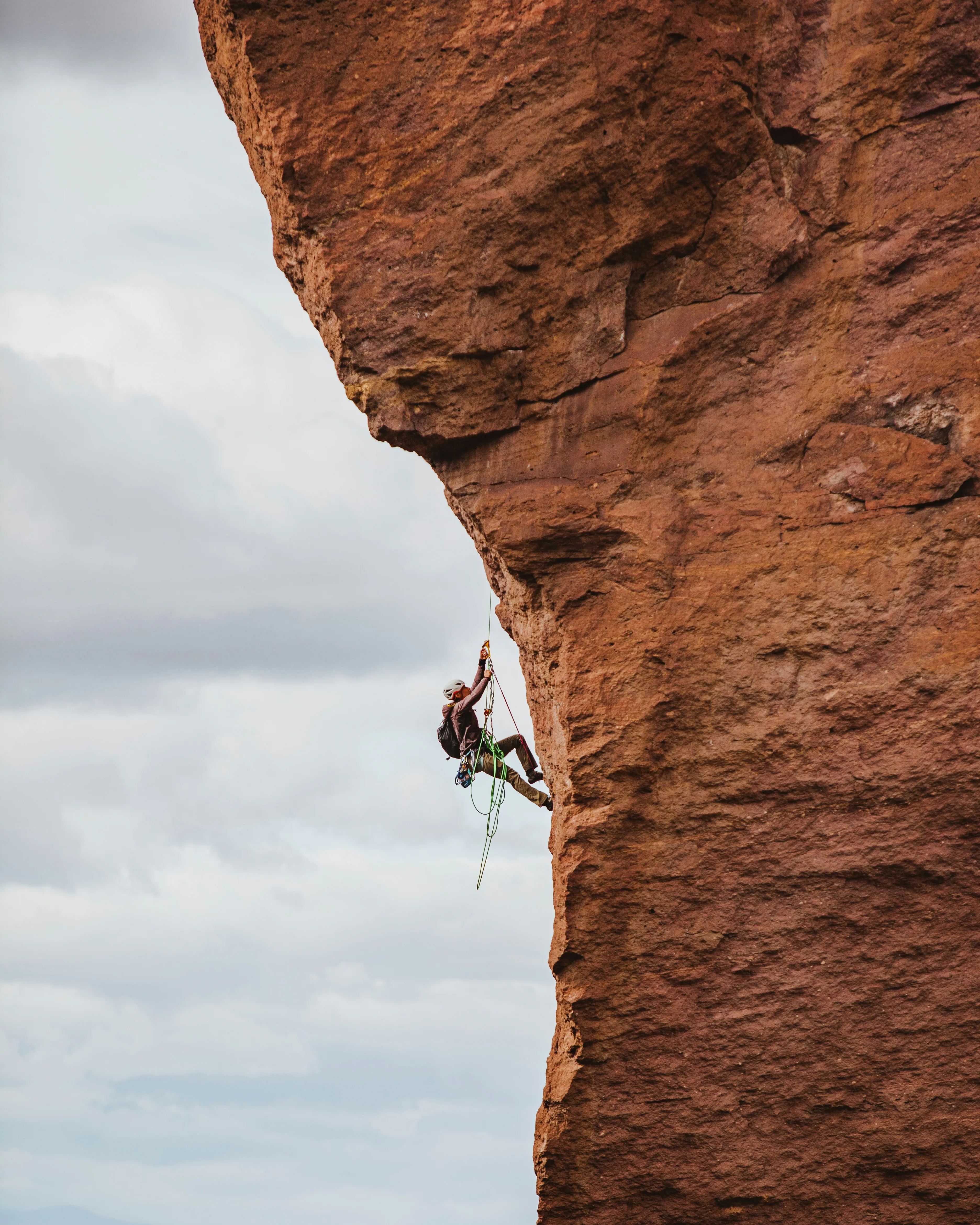
Ever since I first laid eyes on the Boulder Flatirons in the Summer of 2007 I wanted to climb them, but at the time I was nothing more than a mere sport climber and had only been doing that for about a year. The Flatirons are largely (no pun intended) what inspired me to get into trad climbing. I quickly realized that there would be a limit to where I could climb if I didn’t pick up a rack of gear and start climbing traditional style. That next winter I lead my first route in the Wichita Mountains of Oklahoma. A year and a half latter I would return to the Flatirons to climb Fandango (5.5 II) on the first Flatiron.
Our day started out around 6 a.m. but we didn’t arrive at the parking lot of the Flatirons to nearly 9 a.m. – the night before we were unable to finding camping close to Boulder, which lead us 35 miles south of town to find a reasonably priced hotel. Getting a late start on the rocks is my pet peeve. I always like to be out as early as possible, but this time it really didn’t bug me because I was so excited.
On our way up to the route we were not quite sure which direction to go at a fork in the trail but another group of climbers was coming up behind us, we asked which direction to head for the First Flatirons and they pointed us in the right direction, they had actually been planning on climbing the same route, but graciously decided to start on another route just to the left of ours.
After a winded walk up the meadow hill and through the trees we arrived at the base of our climb. My partner John was pretty gassed but recovered fairly quickly and was ready to go by the time I racked up. As I started the route I knew I was going to be in for a challenge that day as the first flake I could see to place gear was about 20-30ft up the route. Once I arrived at the flake I discovered it was hollow. The rumors I had hear were true, the Flatirons hardly took any gear and were full of hollow flakes that would likely shatter if you took a fall them with gear placed under them. But I placed gear anyway, just to help with my mental game and soon I was off, running out the rope further and further between pieces of gear.
I found the climbing pleasing and the rock aesthetic, never did I feel as if I was in a desperate situation after I placed my first piece of gear. I was climbing with the most confidence I have had in a while (if only that held for the Lumpy Ridge portion of our trip). We finished the actual climb in about four pitches, but were held up by the other group next to us around pitch three. Rather than staying on the route they had planned on they ended up doing a variation of the one we were one and crossed our path.
So after chilling at a belay for about 20-30 minutes we were off again and encountered what I considered the crux pitch of the route, “The Quartz Crystal Pitch”. This was the steepest section of rock on the route, hardest to protect and really the only “mental” challenge of the day. But I made it through the rough crystal encrusted section of rock with plenty of grace and soon found myself at the top of the route. After bringing up my partner John we discovered we were not quite through with the route. We still had to “summit” the route. In order to descend the route we had to traverse the ridge of the Flatiron to the far Southwest summit and descent on the rappel anchors. The traverse was easy, but somewhat tedious because of high winds, which made communication with my partner difficult. We ended up breaking up the route into numerous short pitches rather than two or three. It was a pain to keep changing over at the belay station since we were not swapping leads, except for a couple really short pitches that did not require placing protection, but we finally made it to the summit and rappelled down to the back side of the Flatiron.
At this point we were both dying of thirst. I had consumed all three litters of water I brought; John had to drink all of his water around the third pitch while waiting on the other party because he dropped the lid to his Nalgene. Neither one of us knew the best way down, so we asked a hiker that was walking by after our descent. The generous man pointed us down a trail that lead down a valley on the east side of the Flatiron, but little did we know that was not the fastest way down.
Our hike back to the car was slow and sluggish. At one point I saw a small apple tree and remembered I had a large Granny Smith apple in my backpack. Knowing fruits are hydrating I sat down on a small step in the trail and ate half the apple before beginning to hike back down again. The apple provided just enough energy to get my back down the trail and provide me with a boost of speed once I arrived at the meadow.
We arrived back at the car with plenty of daylight left (unlike another part of our trip) and set out to find a place to stay for the night, which ended with us staying in the Boulder International Youth Hostel. The entire day, car to car took about nine hours. I would say that is not too bad for a couple of guys that haven’t climbed more than three consecutive pitches in a row, had to wait on another party of climbers and had a hellish walk back to the car.
The First Flatiron was one of the highlights of the trip for sure. Longs Peak via the North Face Cables Route was likely the second high point, if not the first. Well, it literally was the high point of the trip at 14,259 feet. So, be sure to check back soon for my report on our ascent up Longs Peak.